Showing posts with label music. Show all posts

03 October 2010

North Carolina No Wave

So that I can continue my inconsistent and unreliable use of generic labels, I present Dig Shovel Dig's self-released CDR. They're not really No Wave, but they're not really anything else either.

I used to see Ted Robinson and Mark Williams (better known as Ted & Mark) play around Asheville, where they were both living at the time. They made a lot of noise for a two-piece band held together by just drums (Mark) and bass (Ted). Goofy looking and goofy sounding, I thought they were a novelty act the first time I saw them play. The show was in an old factory rented out as art studios, some of which served as illicit living spaces. Before playing Ted rolled out a blanket, set up some metal mixing bowls and a couple of keyboards, then took off his shoes. He played barefoot so he could use his toes on the keyboards. I don't remember what he did with the mixing bowls.

If Ted's comments in an interview from earlier this year with Puddle of Myself are to be believed, they sort of were a novelty act (more specifically, he says it was a "stupid band"). Novelty or not, they were the first band that made me think seriously about texture and dissonance in music. Ted wrote some catchy melodies, Mark played some infectious beats. But their fast-paced distorted grooves and percussive bursts took them beyond the bounds of rock into sonically rich territory that, I think, made them more than a stupid band.

I stopped going to their shows after Ted, all caught up in a musical freak out, kicked me in the chest. Mark almost made up for it, though, when he handed me his drumsticks in the middle of a song so he could go to the bathroom. My minute and a half as a pinch hitter for Dig Shovel Dig made me realize that they weren't just a joke band fucking around, making noise. In fact, they were well practiced and precise.


If I remember correctly, they were into bands like Lighting Bolt and Mr. Bungle. At its best, however, their avant-garage sound reminds me of Pere Ubu.

14 September 2010

North Carolina New Wave II


Just down the mountain from Asheville, a different new wave scene gripped the piedmont area for which Piedmont Charisma was named. I think both Cold Sides and The Nein were from the triangle, but I first saw them play at some pizza place in Greensboro (with Piedmont Charisma). Saw both bands at other times, but I can't remember where. Anyway, I helped carry an amp out after the show and Robert Biggers, who played with both, gave me the two EPs I'm sharing here.

I didn't know these boys, so I can't say much about their interests or aspirations. The bands sound pretty similar, but The Nein had a better knack for song-writing. It figures, I guess, that they're still together, playing now with Piedmont Charisma's former drummer Josh Carpenter. Cold Sides is long gone from what I can tell by internet searching.

I'm calling them new wave (just to have a follow up post?), but they don't sound like the synth-heavy, glam-influenced pop music a strict definition of that genre would denote. They take their influences more heavily from Gang of Four and post punk sounds. Or anyway, that's my best guess. I remember being impressed by their playing when I saw them live, but now my favorite thing about both EPs is that they're handmade. The Nein put a lot of love into hand-pressing those little cases!

23 August 2010

North Carolina New Wave


Everyone knows that the 1980s got to be cool again in a kitsch sort of way right around the turn of the millennium. (Take that, fin de siècle scholars!) I've always assumed it was part of the twenty-year cycle of coolness: the thin lapels and skinny ties popular during the 1960s came back to haunt the 1980s; second wave feminism and bellbottoms, new in the 70s, were thoroughly distorted but nonetheless revitalized in the 90s; and wait, what's that? The 90s have hit the runway?

Candace Lazarou

If it looks silly to begin with, it always looks at a little sillier the second time around. The 80s comeback exemplified that rule, I think. And yet, as the trend starts to fade, I feel compelled to admit that many of us who thought 80s chic was pitiable at its peak couldn't help falling under its influence. The vintage 80s arrived in the small North Carolina mountain town where I was living from 2002-2006, just about the time it arrived everywhere else, which meant I was right on time for the NORTH CAROLINA NEW WAVE REVIVAL.

Emily Staton

In conjunction with the world of fashion, the 20-year itch of nostalgia left an indelible mark on the music scene in Asheville, NC. Okay, admittedly, it wasn't so central as all that to the music scene. Asheville's best band certainly didn't lose its way. But my favorite band at the time could be described fairly as retrograde 80s new wave. The members of that band wouldn't appreciate the description, I'm sure, so let me add a caveat. Among the mad wash of neon leggings and blipping synths, they harvested the most interesting ideas and plenty from beyond that limited sphere of influence. That's what makes them worth sharing here.

Charles Corriher

Piedmont Charisma was a five-piece band featuring Josh Carpenter (drums), Chad Pry (bass), Ben Ridings (guitar), Emily Staton who was later replaced by Erin Sale, and Charles Corriher (vocals) who seems to have had a falling out with most everyone in Asheville. I lived with Charles for a time while he was dating my friend and then roommate Candace Lazarou. He gave me fodder for one hundred good stories, none of which I remember anymore. But, while living with Candace (and sometimes Charles) I played in her band, which sounded a lot like his.

Piedmont Charisma (2002)

Some people called the band "Candace Charisma" instead of its proper name, Congratulations, which she hated because it came a little too close to the truth. She also hated her music being described as New Wave, 80s Dance or Synth Pop, but I suppose none of those labels tell a lie. We described it otherwise, of course, but our disavowal didn't save us from sounding like part of a trend. I guess time leaves its mark on shitty art. I can still hear a sincere grasp for something better in those songs, though, so I'm sharing them with the world for the first time. They deserve that.

Josh Carpenter

Perhaps my former band mates would disagree. Two of the four of us have gone on to record better things. Jascha Ephraim (drums and professionalization) moved to California to make it big and, whatever success is, he certainly made it bigger. Evan Hill (guitar, song smithing) now fronts his own band, Wilson the Rocker. Last I heard Candace (guitar, keys, vocals, vision) was driving around the Continental United States in a Kia Sephia, but even she's still making music. I, on the other hand, put my bass away and am now writing stuff so boring that not even my family will read it (this blog included).

Evan Hill

Whatever. Have a listen to Congratulations' only demo. We recorded it in the fall of 2003, if I remember correctly. It's not a great mix, but the guy who did all the work did it for free and did it in a hurry. I hear there's a better mix and another song floating around somewhere, but I don't have either. I do, however, have a copy of Piedmont Charisma's only album, released in 2002, which I'm including alongside the Congratulations demo for an honest comparison. Apparently Piedmont Charisma almost finished a second album before learning to hate Charles Corriher's guts, but it's never been released. Their best recordings are from an early single, which has been posted at Willfully Obscure.

Nearly ten years later, it all sounds oddly dated and post-dated. Who knows, maybe it'll be cool again ten years hence.

16 August 2010

We Insist! Freedom Now Suite

I didn't want to post this one on account of the lead vocalist's death, but here's the occasion. Abbey Lincoln died Saturday, August 14, 2010. She provided the vocals for one of the most impressive and important recordings of the 20th Century, Max Roach's Freedom Now Suite. Please have a listen.


22 June 2010

Sabor a Papayera

Back in 2008 I visited Barranquilla, Colombia with G-D. It turned out to be one of the best trips I've ever made, not just because I left 12-inches of snow in Buffalo and landed in the warm Caribbean where G-D's family served us sancocho, took us to bull fights in Cartagena, drove us around to Gabriel García Márquez's old haunt, drank beer with us at the beach. In addition to all that, her cousin Quique, himself a masterful accordion player, introduced me to the wonderful sound of Papayera.

What is Papayera? It's a bit unjust to treat this powerfully informal music schematically, but oh well: Papayera is a folk music from the northern coast of Colombia that combines polyrhythmic percussion with horns, vocals, accordion and any other instrument on hand. Apparently the name comes from a tradition of using hollowed-out papayas for percussion. The music is often associated with the colorful public buses called Chivas. Despite all typical characteristics, however, Papayera takes many forms because it doesn't adhere to any formal guidelines of genre. Papayera bands form on the street corner, incorporate anyone playing, interpret everything from cumbias to vallenatos to god knows what else.

All that may seem like a set of familiar enough ingredients for folk music, but the first time I heard Papayera it struck me as unlike anything I'd ever heard before--something like New Orleans jazz washed ashore on the beaches of South America and broadcast back to my North American ears through a chain of Caribbean transmitters. It smacked a smile on my face before my grumpy little rust-belt heart could protest.

Unfortunately, I didn't get a chance to make a copy of that disc Quique played for me. When I got back to wintery Buffalo, though, I started searching the internet to find some recorded trace of Papayera. I didn't find much, perhaps because not much has been committed to tape or perhaps because not much has circulated this far. I did turn up one cheesy looking release by Banda 11 de Enero and, empty-handed otherwise, placed my order. It turned out to be as exciting as whatever it was I heard in Barranquilla. If you need to get a party started this summer, or stay awake while on the road, this should do the trick.

I don't know much about the release, but there are a few copies available on ebay if you've got the money. (I'm not saying it's not worth it!) The package doesn't clear up any mysteries, though, doesn't even name the musicians. I've seen a few references to Banda 11 de Enero around; nothing really adds to the back ground. Fortunately, the music speaks for itself. Have a listen. It'll make you happier than a little girl serving Aguila in her mother's pumps.

17 April 2010

causal theory barbecue

that designate an underwater shadow
named querelle and in my tongue urban.

curved and flew out an old baptism
turned to compose the original dub

brushed up screaming on my witness.

god shammgod shammond mcgriff mccracklin
stuttin mcintyre sitkovetsky bettye
lavette the onions and the beautiful texas

lemons boudin the other devilish sausages
msg and cripke down on slauson

lemon texas minnie sliver nine.
that metallic fade no blues all blues aw

the syntactical law within fills me with law
then gasp at the flavor and run on again.

-Fred Moten, from hughson's tavern


30 October 2009

Halloween Pt. 2

And here's the new Halloween mix. I don't have anything more to say about the subject, though, so here are also some (faux?) old Halloween cards I found on the Internet. It seems that women are the primary ambassadors of Halloween greetings here. Or, to be more precise, women, pumpkins and black cats. There's probably something interesting to say about that, but I don't know what right now. In the meantime, enjoy the music and Happy Halloween!


Halloween '09

1. The Specials -- Ghost Town
2. Otis Redding -- Trick Or Treat
3. The Cadillacs -- Frankenstein
4. Knife in the Water -- Sunset Motel
5. Ken Nordine -- Fliberty Jib
6. Ken Nordine -- Strollin' Spooks
7. Vampires' Sound Incorporation -- The Lions and the Cucumber
8. Flamin' Groovies -- Teenage Head
9. R. Dean Taylor -- There's A Ghost In My House
10. Frankie Trumbauer and His Orchestra -- Shivery Stomp
11. New Orleans Owls -- White Ghost Shivers
12. Gene Krupa and His Orchestra -- Dracula
13. Vic Mizzy -- Main Title (from The Ghost and Mr. Chicken)
14. Zeke Manners & His Swing Billies -- Mr. Ghost Goes to Town
15. Wayne Raney -- Jole Blon's Ghost
16. Happy Wilson -- Haunted House Blues
17. Bob McFadden -- The Mummy
18. John Zacherle -- Ring-a-ding Orangoutang
19. Screaming Lord Sutch & The Savages -- 'Til the Following Night
20. Meic Stevens -- Ghost Town

29 October 2009

Halloween Pt. 1

What? You thought Luck Mon-gol was a dead blog? In fact, it is a living dead blog. I'm taking a moment away from more pressing duties to resurrect it for Halloween. I'd hate to pass up the opportunity to post a few things related to our most gruesome holiday. The most gruesome, that is, unless you consider Easter's single resurrection grislier than Halloween's many.

To be honest, I've always preferred spring to fall. However, living in a place that turns into a paint-by-number canvas during the autumn months, with nothing but six months of gray winter to come, fall begins to look special. Plus, my dear friend CMS celebrates her birthday on Halloween, which has encouraged me to see it as somehow more spectacular than Jesus's ascension into heaven. Certainly it is more social. In fact, I've come to think of Halloween as the cruising holiday--the year's only occasion to go knocking indiscriminately on neighbors' doors with no other goal than receiving a tasty treat to plug a hungry hole. Spring may be about breeding and regeneration, but fall is all about terrifying libidinal activity, gluttony and death.

So, I've begun to see the pleasures of autumn and especially of Halloween. Last year I documented my new-found appreciation with a Halloween mix that I took to a Halloween party, where I ate Halloween candy and enjoyed Halloween excesses (i.e. beers, farts, lollipops). I'll share the first of those various pleasures here. A Halloween '09 Mix will follow shortly. And, if I get time away from those more pressing duties, perhaps I'll share some other Halloween treats. Until then, enjoy this first installment of the online celebration--my very first holiday themed musical mix.


Halloween '08


1. Soupy Sales -- My Baby's Got a Crush On Frankenstein
2. Alfred Hitchcock Presents -- Music to Be Murdered By
3. Captain Zorro -- Phantasm
4. Ralph Dorper -- Eraserhead
5. Live Skull -- Corpse
6. Zane Bros -- Dracula
7. Homer & Jethro -- Keep Them Cold Icy Fingers Off of Me
8. Patsy Montana -- Yodelling Ghost
9. Hasil Adkins -- Haunted House
10. Monica Kirby -- Scary Movies
11. John Zacherle -- Coolest Little Monster
12. Harry Belafonte -- Zombie Jamboree
13. Duke Ellington -- Haunted Nights
14. Jelly Roll Morton -- Boogaboo
15. Louis Armstrong -- The Skeleton In the Closet
16. Ultra Chicks (feat. Nicole Paquin) -- Mon Mari, C'este Frankenstein
17. Bela LaGoldstein -- Old Boris
18. Bo Diddley -- Bo Meets the Monster
19. King Horror -- Loch Ness Monster
20. Sonic Youth -- Scream (live, '83)

11 September 2009

Knowing Where to Draw the Line

While driving home from school today a well-dressed mannequin standing in someone's front yard caught my eye. Behind her were piles of old clothes, accessories, luggage and a friendly woman welcoming people to peruse the collection. Nothing had price tags, but she (the woman, not the mannequin) said that she could part with most anything for under ten dollars. That seemed fair enough, so I dove in and soon discovered that Buffalo's best vintage store had sprouted up overnight in my residential neighborhood.

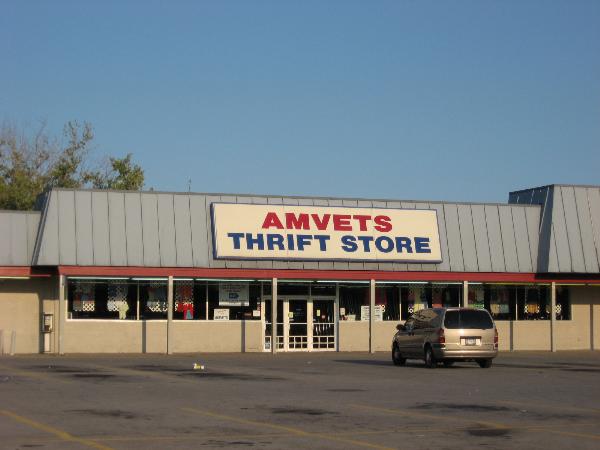
I found a few fashionable ties, two of which have tags from Buffalo retailers that outfitted the city's finest dressers in more prosperous times. One tie, for instance, came from the Kleinhans Company, which opened in 1893. My first Kleinhans find came from this AmVets about a year ago and it still makes me smile every time I see it in my closet. Needless to say, I was pretty happy to find another one today. I was also quite pleased to find a few fifties-looking sharkskin blazers and a couple of decent shirts. But by far, the most exciting find was a denim jacket with an embroidered caricature of Aerosmith on the back.

Can't believe your eyes? Here's a closer look.

A little Internet research revealed to me that the image comes from their fifth studio album, Draw the Line (1977). According to an uncited bit of trivia on the album's Wikipedia page, the band was so famous at that point that they didn't even need to put their name on the cover!

Indeed, the caricature came so close to the reality that Columbia execs felt confident in its instant recognizability.

In the end I admitted my failed confidence in the efficacy of ironic dress and left the jacket behind. C'est la vie, say the old folks. So obviously I'm not going to post Draw the Line here at Lucky Mon-gol, but if you get a hankering to hear the strange sounds of a Yankee blues rock and 70s glam train wreck, you can find it at the blog of a dedicated fan. I will, however, leave you with one last intriguing photo to ponder.

31 July 2009

Children's Book Edition

I’ve been searching for my wings some time now. I’m going to be born into the sky soon, because I’m a bird girl and bird girls go to heaven. There’s a rainbow in the sky all the time, don’t be blind.


But God did not intend me to fly, so I went to dance in an old grain silo. I hopped and bounced and moved to the beats of one hundred stupendous, ringing drums. My silo dreams echoed with laughs in the dark night. Everything else was only a beginning, I exclaimed, “The first fruits of the new age!”

But the next day my old life was calling. “I got to go to town; I need wheels, daddio.” "Nothin' doin'. You're father's hip and knows what cooks." So I went to the bus stop and that's where Jesus found me. Untoward Christian soldiers blew whistles and passed out pamphlets: "You too have fallen east of eden."


El Shaddai did not have the wings I’d wanted, but I learned that hell is a pot of hot oil.


And heaven a warm plate of bird leg adobo, cast out of the pot and into my stomach.

I did the cookin', pops did the cleanin'.

30 July 2009

Bruce Springsteen


I promised a friend I'd convince him that Bruce Springsteen deserves his reconsideration. I’ve been thinking about how to persuade him for a couple of months now and haven’t gotten much footing on the problem. In fact, my failure to come up with a strong argument on The Boss’s behalf seems to be part of a larger problem I have explaining my musical preferences. So let that serve as a bit of a disclaimer to this post and feel free to skip to the bottom where you can download my very own Springsteen “Best Of,” entitled Reason To Believe, which I compiled from my three favorite albums: Greetings From Asbury Park N.J., Darkness On the Edge of Town, and Nebraska.

Although far from exhaustive, the compilation of songs represents the originality of Springsteen’s work and demonstrates his proximity to several musical genres that I hold dear: Southern soul, mid-century pop, rockabilly, 70s glam, urban blues. By “proximity” I mean simply that he fits none of those genres and does not even produce a self-conscious hybridity of genres as does, say, Bob Dylan. Rather, Springsteen makes smart music that celebrates rock n' roll's un-intellectual roots. At certain points in his career that mission has led him astray, toward reductive representations of “middle America” and working class culture. At his best, however, Springsteen paints a sufficiently complex portrait of America's collective emotional life.

I do want to add one awkward caveat, though, and say that to me the portrait he paints specifically addresses the life of white America. That's not to say that racial politics are insignificant to his music. Obviously he sings loud and proud about his blue collar background and, as Jim Dickinson once explained about a distinctively black and generally political music: “You hear soul music explained in terms of oppression and poverty, and that's certainly part of it -- no soul musician was born rich -- but it's more than that. It's being proud of your own people, what you come from. That's soul.” That was the explanation he gave Stanley Booth anyway, who then glossed it with this quote from a Hayes-Porter song made famous by Sam & Dave’s performance of it:

I'm a Soul Man
Got what I got the hard way
And I'll make it better each and every day
I'm a Soul Man

Springsteen too sings about getting things the hard way, but he rarely puts that boastful touch on it, never really looks to the future for improvement. In fact, he tends to linger on the past that broke the present:

You're born into this life paying
For the sins of somebody else's past
Daddy worked his whole life for nothing but the pain
Now he walks these empty rooms looking for something to blame

In that quote from “Adam Raised a Cain,” Springsteen describes a father-son relationship as a problem of repetition and cyclical violence. The hard work is “for nothing” because it goes toward paying down debt. The workingman here exists in a diminished state of subsistence -- just below breaking even -- that makes progress impossible. Springsteen also hints, however, that assigning blame for inheriting problems becomes an arbitrary, useless and miserable vocation. And indeed, the son/narrator, refuses to blame his father for raising a monster. The relationship, although marked by violence and regret, is quite loving.

The Biblical reference points in “Adam Raised a Cain” are slightly unusual in Springsteen’s lyrics, but the touching and troubled depiction of family life is not. Throughout his work he creates sparse narratives driven by complex characters, complicated emotions. And he does so with complete sincerity. I think it is that sincerity that makes The Boss’s work so special, so unusual and, perhaps, so easily dismissed. He is not the distanced ironist, not a clever satirist, not even an engaged protestor. In fact, his most famous attempt at irony, satire and protest was so poor that it backfired and turned “Born In the U.S.A.” into a national anthem for proud social conservatives.

The Boss is at his best when he’s telling private stories in the first-person. Songs like “Used Cars,” “Highway Patrolmen,” “Racing In the Streets,” and “Mary Queen of Arkansas” all create fictions close to Springsteen’s heart while “Nebraska” demands identification with, if not also sympathy for, a serial killer. That he has successfully and consistently employed sincerity speaks to The Boss’s disciplined power as an artist. Bald sincerity easily turns toward melodrama or, with a wink, camp. But in Bruce Springsteen's hands, sincerity maintains a level of seriousness that really does demand reconsideration from non-believers.

Of course, if the sincerity thing doesn’t grab ya, note that The Boss also has punk credits to cash in. He wrote Patti Smith’s biggest hit, “Because the Night,” which he’s performing here with the original lyrics. (Be sure to check out the lead guitarist, Nils Lofgren, really feelin’ it.)


And here’s recent footage of The Boss transforming the artistic intent motivating Suicide’s “Dream Baby Dream.”


Get the best of The Boss here.

Reason To Believe

1. Blinded By the Light
2. Growin’ Up
3. Mary Queen of Arkansas
4. Lost In the Flood
5. For You
6. Adam Raised a Cain
7. Candy’s Room
8. Racing In the Street
9. The Promised Land
10. Factory
11. Prove It All Night
12. Darkness On the Edge of Town
13. Nebraska
14. Atlantic City
15. Johnny 99
16. Highway Patrolman
17. Used Cars
18. Reason To Believe

24 July 2009

Terry Allen


Terry Allen is playing in Austin tonight, at the Cactus Cafe, a little place on campus that sells beer. It's going to be a great show. I was supposed to go with a friend who owns a sticky note artwork that Allen did based on his song "The Beautiful Waitress." The end includes a recitation that goes like this:

A waitress asked me what I did
I told her I tried (to make art).
She asked me if I made any money.
I said no...I have to "teach" to do that.
She asked me what I taught and where.
I told her.
She told me that she liked art, but that she
couldn't draw a straight line.
I told her if she could reach for something
and pick it up, she could draw a line that
was straight enough.
She said she wasn't interested in that kind
of drawing... but had always liked horses.
I said I did too, but they were hard to draw.
She said yes that was very true... said she
could do the body okay, but never got the
head, tail, or legs.

I told her she was drawing sausages... not horses.
She said no... they were horses.

I've tried to recreate the sticky note below, but the original is a lot better. Sorry.


Anyway, I can't go to the show because I don't have enough money to pay for the gas back to Buffalo and I need to start saving. I'm too down about it to write more, but there's an excellent entry at Pole Hill Sanitarium if you want to know more. They also have a link to a torrent for his 1979 masterpiece Lubbock (On Everything), but if like me you don't know your ass from a peer-to-peer protocol, you can just download it here instead.

Lubbock (On Everything)
  1. "Amarillo Highway (for Dave Hickey)"
  2. "Highplains Jamboree"
  3. "The Great Joe Bob (A Regional Tragedy)"
  4. "The Wolfman Of Del Rio"
  5. "Lubbock Woman"
  6. "The Girl Who Danced Oklahoma"
  7. "Truckload Of Art"
  8. "The Collector (and the Art Mob)"
  9. "Oui (a French Song)"
  10. "Rendezvous USA"
  11. "Cocktails for Three"
  12. "The Beautiful Waitress"
  13. "Blue Asian Reds (for Roadrunner)"
  14. "New Delhi Freight Train"
  15. "FFA"
  16. "Flatland Farmer"
  17. "My Amigo"
  18. "The Pink And Black Song"
  19. "The Thirty Years Waltz (for Jo Harvey)"
  20. "I Just Left Myself"

19 July 2009

The Dixie Cups


Today The Dixie Cups are playing a tribute show for Wardell Quezergue, put on by the Ponderosa Stomp at the Lincoln Center in New York City. The Ponderosa Stomp is based in New Orleans and is dedicated to celebrating and preserving the music of its home city. The mission statement casts a broader net, explaining that the Stomp exists "to celebrate, pay tribute to, and teach the cultural significance of the unsung heroes and heroines of rock-n-roll, rhythm & blues and other forms of American roots music while they are still alive." And they do not limit their shows to New Orleans musicians, but of course, those specific musics came out of New Orleans and almost all American "roots" music can be traced back to traditions that grew from North America's fertile crescent of culture. Quezergue has played an important role in that musical legacy as one of the city's preeminent arrangers, transposing the intricacies and energy of second line rhythm into popular tunes.

To me, The Dixie Cups represent the popular side of Quezergue's work best. The group was originally comprised of two sisters, Barbara and Rosa Hawkins, and their cousin, Joan Johnson, all of whom grew up in New Orleans. More specifically, they grew up in the Calliope Projects, where the Neville Brothers also grew up. Still teenagers, Barbara, Rosa and Joan began singing around New Orleans as The Meltones, and later, Little Miss and The Muffets, which is a great name but probably would not have stuck to the charts quite the way The Dixie Cups did. Still under the name The Meltones, however, they already had a sound that caught the attention Joe Jones, another New Orleans performer. After working with the three women for a short time, he took them to the Brill Building in New York, where he introduced them to the already well-known song-writing team Jerry Lieber and Mike Stoller. Lieber and Stoller were in the process of starting a small record label, Red Bird Records, and The Dixie Cups were their first group.

"Chapel of Love," written by Jeff Barry, Ellie Greenwhich and Phil Spector, was their first hit. It quickly hit number one on the pop charts in spring of 1964, thankfully knocking the Beatles out of that spot. They had several follow-up hits as well, including "People Say," but "Chapel of Love" remains their strongest claim to 1960s pop stardom. Their last hit, however, registers as their most iconic and the most rooted in their home town. "Iko Iko," released on two different singles in 1965 (b/w "Gee, Baby Gee" and "I'm Gonna Get You Yet"), never hit number one; nonetheless it became their signature song. It seems impossible to even mention their success with "Iko Iko," however, without also mentioning Sugar Boy Crawford's 1954 hit "J0ck-a-mo," which sounds remarkably similar.

As the story goes, The Dixie Cups were in the studio with Greenwhich and Barry and between takes began messing around, banging out a polyrhythm on ashtrays. They didn't realize that the tapes were rolling and, supposedly, Greenwhich and Barry simply dubbed in brass and drums before releasing it. Part of this myth also suggests that Barbara, Rosa and Joan learned the song from their grandmother, as Barbara seems to have claimed publicly, and that it must have therefore been an old Mardi Gras Indian folk song. Crawford's "Jock-a-mo" complicates the myth a bit, but has also led people to assume, on the other hand, that The Dixie Cups and Red Bird ripped it off from Crawford, who never achieved the sort of fame The Dixie Cups achieved. So, there are a number of confusing points to unravel.

First of all, they may very well have learned the song from their grandmother. Each of The Dixie Cups women were quite young when Crawford's version became a regional hit. It's likely, however, that they heard versions of it around town as they became teenagers and started getting interested in performing popular music. In any case, The Dixie Cups certainly didn't record the song on accident. There's an accapella version available on CD (or for download here) where they can be heard starting the song over, with direction from the control room, indicating that they recorded at least a second take. Furthermore, Barry and Greenwhich didn't just make an accidental recording and, on good intuition, turn it into a hit. In fact, that messing around on ashtrays was arranged percussion by Wardell Quezergue. Quezergue would have known Crawford's "Jock-a-mo" well, as he was already playing music in New Orleans when it was released.

Of course, he also would have known the Mardi Gras Indian chants that Crawford cribbed from to compose his song. Unfortunately for Crawford, and many, many other disenfranchised 20th century musicians, music copyright is a prickly affair that usually benefits the industry, rather than the creative and cultural forces that produce anything worth copyrighting. The important point for this post, however, is that The Dixie Cups and Quezergue held their culture and its history in high enough esteem to reformulate the New Orleans tradition in a New York City recording studio without flattening it out into the generic sort of dribble that many yankee businessmen thought appropriate for mass production.

I love "Iko Iko" for its simple presentation of complicated rhythmic patterns and its spontaneous (which is not to say accidental) energy. The arrangement retains the second line ebullience while also being spare enough to appeal to a radio audience. And, unlike "Chapel of Love," which seems quite dated, perhaps because its extraordinary fame helped define a certain 60s aesthetic, "Iko Iko" continues to sound like a breakthrough in popular recording. In 1964, Red Bird released a compilation of The Dixie Cups's singles under the title of their number one hit. I picked it up at Harvest Records in Asheville, NC on my way through town, where I stopped to have dinner with friends before moving on toward Texas. It was a steal at $4 and has filled my summer with much pleasure.

After their initial success Joe Jones decided to move The Dixie Cups over to the larger label ABC-Paramount. While they had other hits, they never were quite as successful and, under pressure to tour constantly, Joan left the group. Shortly thereafter legal troubles convinced the Hawkins sisters to do the same. They've been back at it for several years now, peforming with their old neighbor Athelgra Neville. It's nice to see them making a living from their music and nice to see them carrying the torch with the Ponderosa Stomp, despite having to relocate after Katrina. Since I can't be at the Lincoln Center tonight, I thought I'd share the music with y'all here. Enjoy!


Chapel of Love

1. Chapel of Love
2. Gee the Moon Is Shining Bright
3. I'm Gonna Get You Yet
4. Ain't That Nice
5. Thank You Mama, Thank You Papa
6. Another Boy Like Mine
7. Gee Baby Gee
8. Iko Iko
9. Girls Can Tell
10. All Grown Up
11. People Say

28 June 2009

Rythm Oil

This blog and Stanley Booth's book Rythm Oil: A Journey Through the Music of the American South have something in common: They both borrow their titles from a long gone curios manufacturer out of Memphis. By "curios manufacturer" I mean a hoodoo shop, which sold incense, oils and tonics with vaguely magical properties. Apparently hoodoo shops used the term "curio" to avoid accusations of mail fraud and false advertising. In any case, Rythm Oil, no doubt one of their better selling products, seems to advertise its powers clearly enough:


I don't know much about the company. All that seems to remain are a few labels people have come across in junk shops. It works well as a title for Booth's book, however, which is ostensibly about Southern music, but which really draws on all aspects of Southern culture to offer intimate portraits of forgotten icons, fill in the shadows of shining stars, create a living diorama of diverse landscapes, and splash oblique swatches of light on the author's life. Like the Lucky Mon-Gol Company, Rythm Oil has its headquarters in Memphis, TN, Booth's hometown for many years. He grew up on the swamp lands of Georgia, but moved with his family to Macon when he was sixteen and shortly after that to Memphis. There he met many of the people he writes about, including Furry Lewis, B.B. King, Sam Phillips, Charlie Freeman, Elvis Presley and practically the entire Stax recording roster, including Rufus and Carla Thomas, Isaac Hayes and Otis Redding.

The book itself is a collection of essays, most of which were published elsewhere originally and most of which are interesting. I'm especially fond of one he wrote for Esquire on Elvis. Dated 1967, it deals with Elvis at the apex of fame and at the nadir of his music career. Just coming off several years of Hollywood mass production, Elvis was between his early success as a rebel rousing teen sensation and the bloated decadence of the 1970s, reeling from the monotony of movie work and still two years away from staging a home-coming musical resurgence. The article begins with this quote from Dewey Phillips, which Esquire declined to publish: "Talkin' about eatin' pussy, me and Sam Phillips used to make old Elvis sick with that stuff. We'd sit around the studio, down at Sun Records, and talk about how good it was, and he'd get so sick he'd go out back an puke." It ends with Elvis at Graceland, "all alone for a change, riding his motorcycle around the pool, around and around and around."

I didn't expect to like the book much. What I expected were a few interesting anecdotes drowning among intellectual snobbery, sexual objectification dressed up as realism, pretension paraded as in-the-know rock n' roll savvy, unrelated articles bound as a book, just another Greil-Marcus-rock-critic running fun music through the bowels of pompous academic inquiry. To the contrary, however, I have enjoyed the book and am struck by Booth's sincerity. He really loves his subjects and writes about that love honestly, even when its complex and compromised. The fact that he has some retrospective distance on the articles helps, as he's able to tie the separate pieces together by weaving them into an autobiographical narrative. For instance, he's able to include the above comment from Dewey Phillips without endorsing it (even though he clearly relishes the moment) because he explains first that Phillips, "gave me the lead of a lifetime. I knew anyone who saw the first four words would finish reading the piece, hoping that it contained more of the same." The most important thing about the book is that he lets the people populating its pages speak for themselves.

In an article on Al Green it seems that the "Psalmist of Soul" did most the work putting the piece together. Roughly six of the seven pages are direct quotes. And although that doesn't seem like such a good writing technique, it really pays off with passages like this:

"I woke up one morning and wanted to complain. I went to my study and wrote all the bad that had ever happened to me that I could remember. Then I thought, 'Now I'm gonna flip the page, I'm gonna write another page on the good things.' I wound up making a sermon titled 'Count Up the Cost.' What the Devil has done, compared to what God has done, can't be measured. It's not even to be mentioned. Sure, there have been some bad things, if you're about anything, you gonna have that. But I went to my wife and I said, 'You know what? The cotton-pickin' good things outweigh the cotton-pickin' bad things.' And I went out and apologized to my racoon."

"You did what?"

"Well, I had shot at my racoon, because he keeps goin' in my incinerator, and he have cans all over my yard. He digs in there, and my wife puts biscuits and things in there -- I kind of think she's putting them there on purpose, 'cause she knows he's been living out there three years. So I went out there with my pistol and went bang bang bang and he went drdrdrdr toward a tree, and he finally made it. And my pet bull, Ralph -- he weights two thousand pounds, a
big bull, black Angus and Brahma, with a big hump on on his back -- and all the animals were looking at me, they are so sensitive, they were looking at me like, 'What are you doing? Do you actually want to hurt the little racoon?' I have two horses, and they were looking very sad. The cows, the horses, the bull, they looked at me like, Thumbs down for Al. I said, 'Will you guys just clear out of here?' Because I felt real bad, real corny about shootin' at the poor racoon. So I called my horse, and he went the other way. I really got the cold shoulder from everybody. So I called out in the woods, I said, 'Hey raccoon! You can come back over here now!' And I heard him making a noise, coming back to his favorite tree. I said, 'Are you people -- excuse me, are you animals satisfied now?' "

I don't know why rac(c)oon is spelled two different ways, but the rest of the article is concerned primarily with Green's conversion from sexy soul singer to a Pentecostal preacher. Apparently he was spurred in his move toward God by two events that landed him in the hospital. The first was in 1974 -- a woman poured "Memphis napalm" (boiling grits) down his back. In 1979 he fell off a stage in Cincinnati and hit his head on a metal instrument case. After that, Al Green recorded his first all-gospel record and opened his church, the Full Gospel Tabernacle, just south of Graceland, where he still preaches today. Join him for worship next time you're in Memphis. And to find out more about why you should be visiting Memphis in the first place, check out Rythm Oil or check back in with me here, as I'll have more to say on the subject soon. Oh, and also, this used to be a really good blog about Memphis, although, recently it's become something more general: at home she feels like a tourist.

Finally, here's Al Green doing a Kris Kristofferson song: For the Good Times (links to mediafire).

27 June 2009

Here I Am


Here I Am
, released by Scepter Records in 1966, was Dionne Warwick's fifth album. Its first two singles, the title track and "Looking With My Eyes," failed to chart on the top 40. The third single, "Are You There (With Another Girl)," one of my very favorite Dionne songs, charted at #39. Despite her modest chart positions, however, Dionne Warwick made a huge impact singing the songs of Burt Bacharach and Hal David. She brought a classy approach to sophisticated popular music during the 1960s and performed Bacharach's complex tunes gracefully, marking the high-point of her own, Bacharach's and David's careers. "Adult Contemporary" may be a contemptuous genre in general, but Dionne offered it a soul major record labels quickly sold off for higher Billboard ratings.

Here I Am in particular achieved a sophistication many of her more pop-oriented albums did not, although her singing remained consistently powerful and naunced throughout the Scepter years. Not to say I prefer this album to her others. Anyone Who Had A Heart is probably my favorite, with its perfect balance between girl-group pop and Brill Building professionalism. It's just that Here I Am seems like an appropriate place to start this blog. Here I am, blogosphere, with my first post. Dionne has been formative in my life, and she'll be formative to this blog. I hope that what follows can live up to this wonderful recording.

See comments for link to the music.

Tracks:
  1. "In Between the Heartaches"
  2. "Here I Am"
  3. "If I Ever Make You Cry"
  4. "Looking with My Eyes"
  5. "Once in a Lifetime"
  6. "This Little Light"
  7. "Don't Go Breaking My Heart"
  8. "Window Wishing"
  9. "Long Day, Short Night"
  10. "Are You There (With Another Girl)"
  11. "How Can I Hurt You?"
  12. "I Loves You, Porgy"